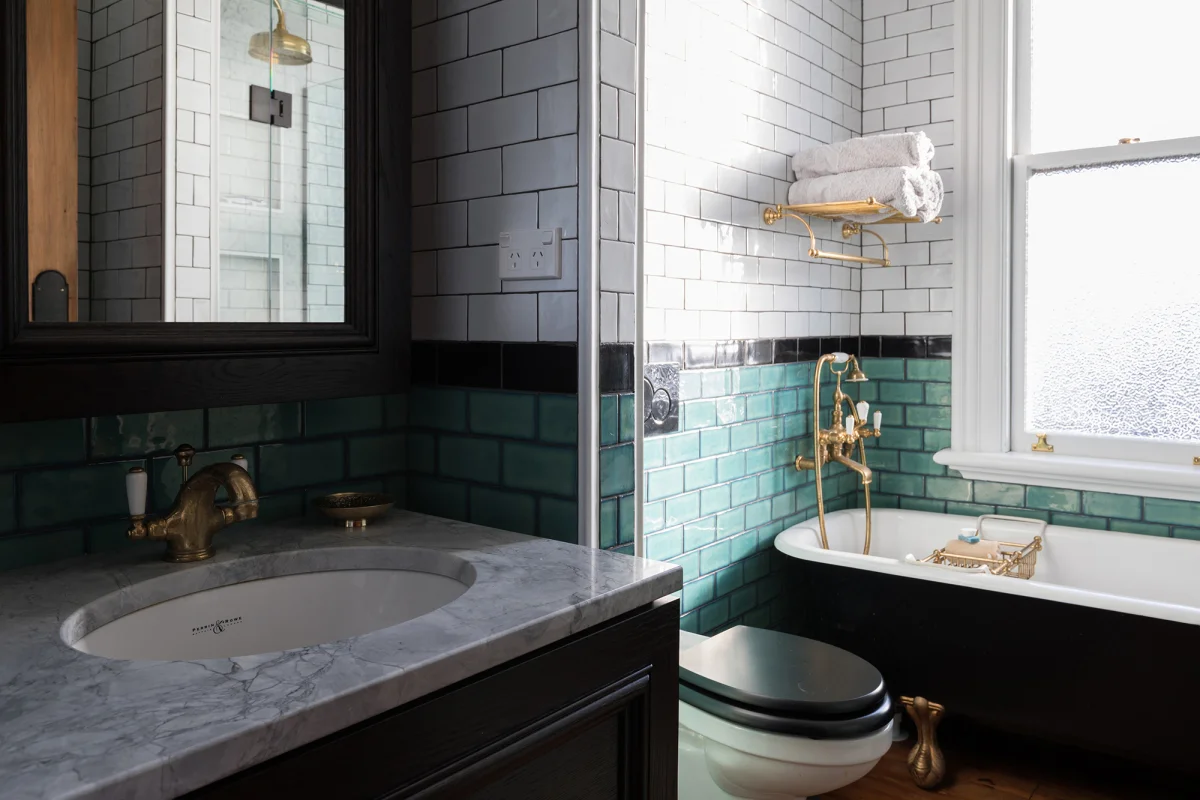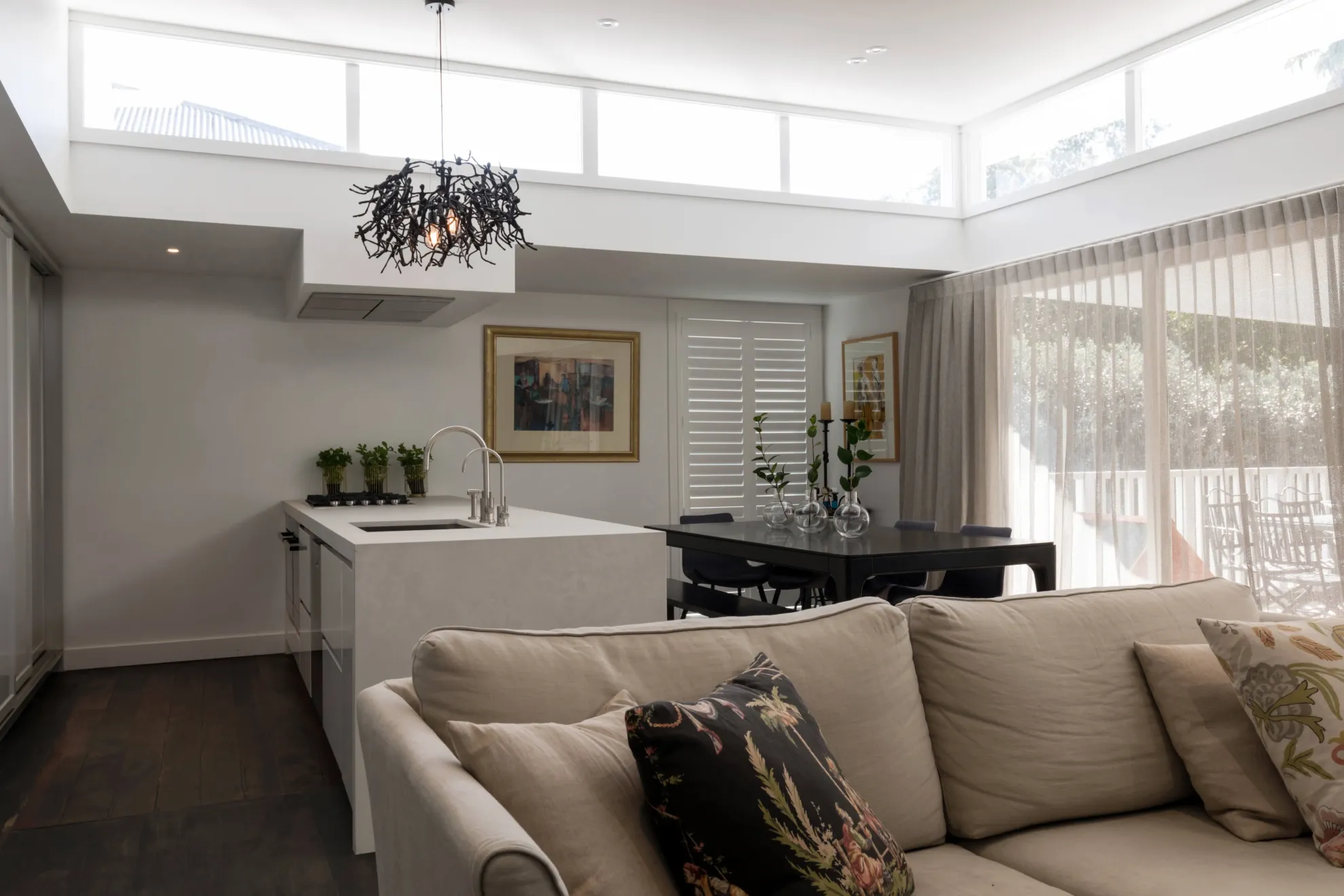
One of the most underestimated design choices in any kitchen is the curtain. For too long, kitchen curtains have been dismissed as fussy, impractical, or simply unnecessary. But in a truly bespoke interior, the decision to include beautiful curtains in a kitchen can be one of the most transformative choices you make. As Joanne Godding puts it: ‘Don’t be afraid to put gorgeous curtains in your kitchen. Dramatic, evocative, unique.’
This is not about café curtains or simple voiles hanging above a sink. This is about using fabric with intention, with confidence, and with an understanding of how soft furnishings can completely shift the feeling of a space. Kitchen curtains, when chosen well, bring warmth, texture, colour and a sense of personality that no cabinetry finish or benchtop material can replicate on its own.
If you are planning a bespoke kitchen or interior renovation in Auckland or anywhere across New Zealand, this article will show you exactly why kitchen curtains deserve a place in your design conversation from the very beginning.
Table of Contents
-
Why Kitchen Curtains Are Not Just for Bedrooms or Formal Living Rooms
-
Using Fabric, Pattern and Colour to Create Drama and Personality
-
How Kitchen Curtains Help Connect the Kitchen with Dining and Living Areas
Why Kitchen Curtains Are Not Just for Bedrooms or Formal Living Rooms
There is a lingering assumption in New Zealand homes that curtains belong in bedrooms and formal lounges, and that kitchens should be dressed with blinds at most. This assumption is worth challenging, because it limits the design possibilities in a space where you spend a remarkable amount of time each day.
Kitchens have evolved. They are no longer purely functional rooms hidden away at the back of a house. Today, the kitchen is the heart of the home, open to dining and living areas, used for entertaining, for morning rituals, for family gatherings. A space this central to daily life deserves to be treated with the same design care as any other room in the house.
Kitchen curtains bring a residential warmth to a space that can otherwise feel hard and commercial. They signal that this is a home, not a showroom. When Joanne works with clients on bespoke interiors, the conversation about soft furnishings, including curtains, begins at the same time as the conversation about cabinetry, joinery and benchtops. This holistic approach is what separates a truly resolved interior from one that feels almost finished.
The Practical Case for Kitchen Curtains
Beyond aesthetics, kitchen curtains offer genuine practical benefits. They can manage afternoon light in west-facing kitchens, reduce glare over dining tables, provide privacy without sacrificing the feel of openness, and help with acoustics in spaces that include hard surfaces like stone, tile and timber.
In New Zealand homes, particularly in older villas and bungalows, large windows are common and beautiful. Kitchen curtains allow you to honour those windows architecturally while giving yourself the flexibility to control light and atmosphere throughout the day. This is not a compromise. It is good design thinking.
How Curtains Soften Hard Kitchen Materials
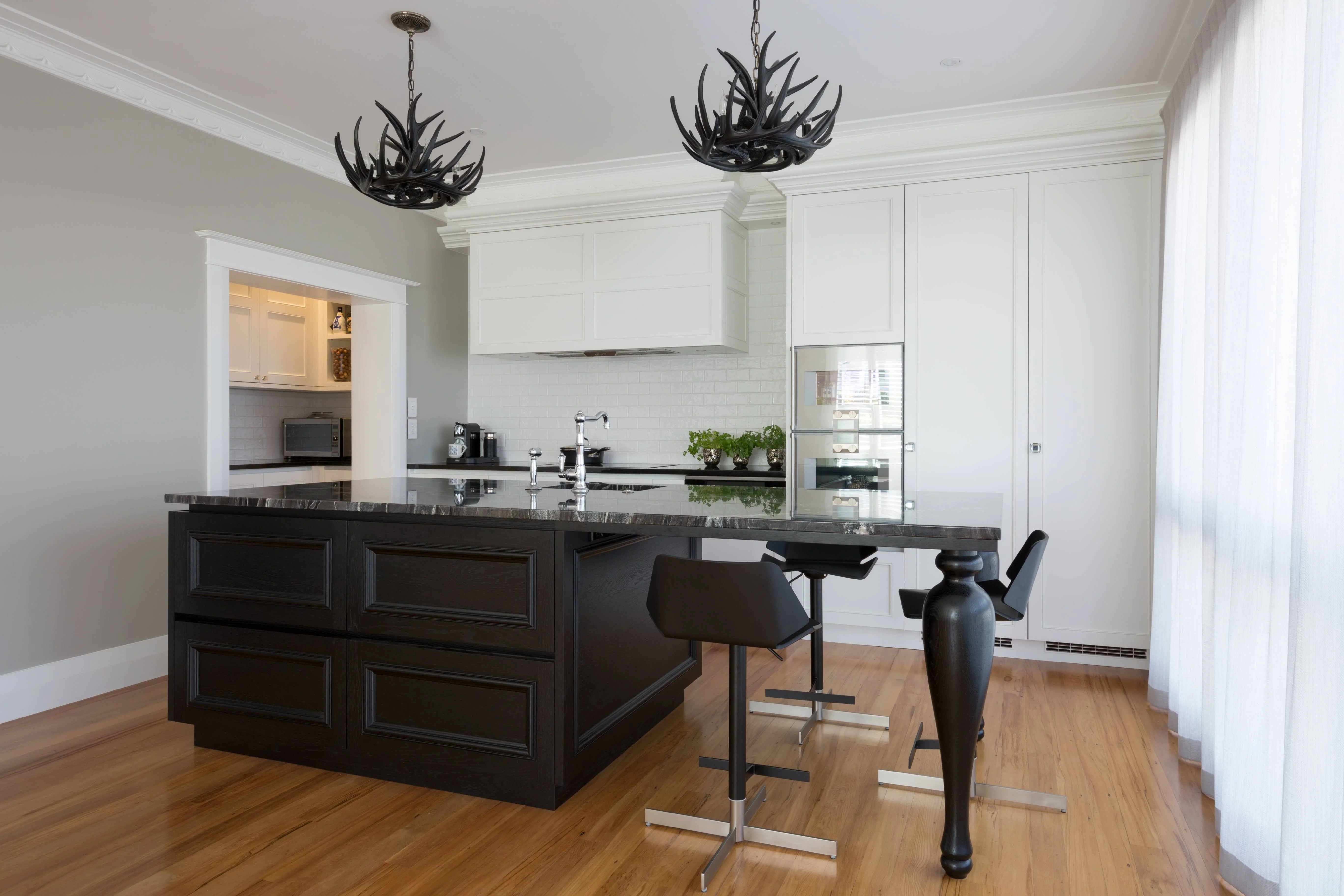
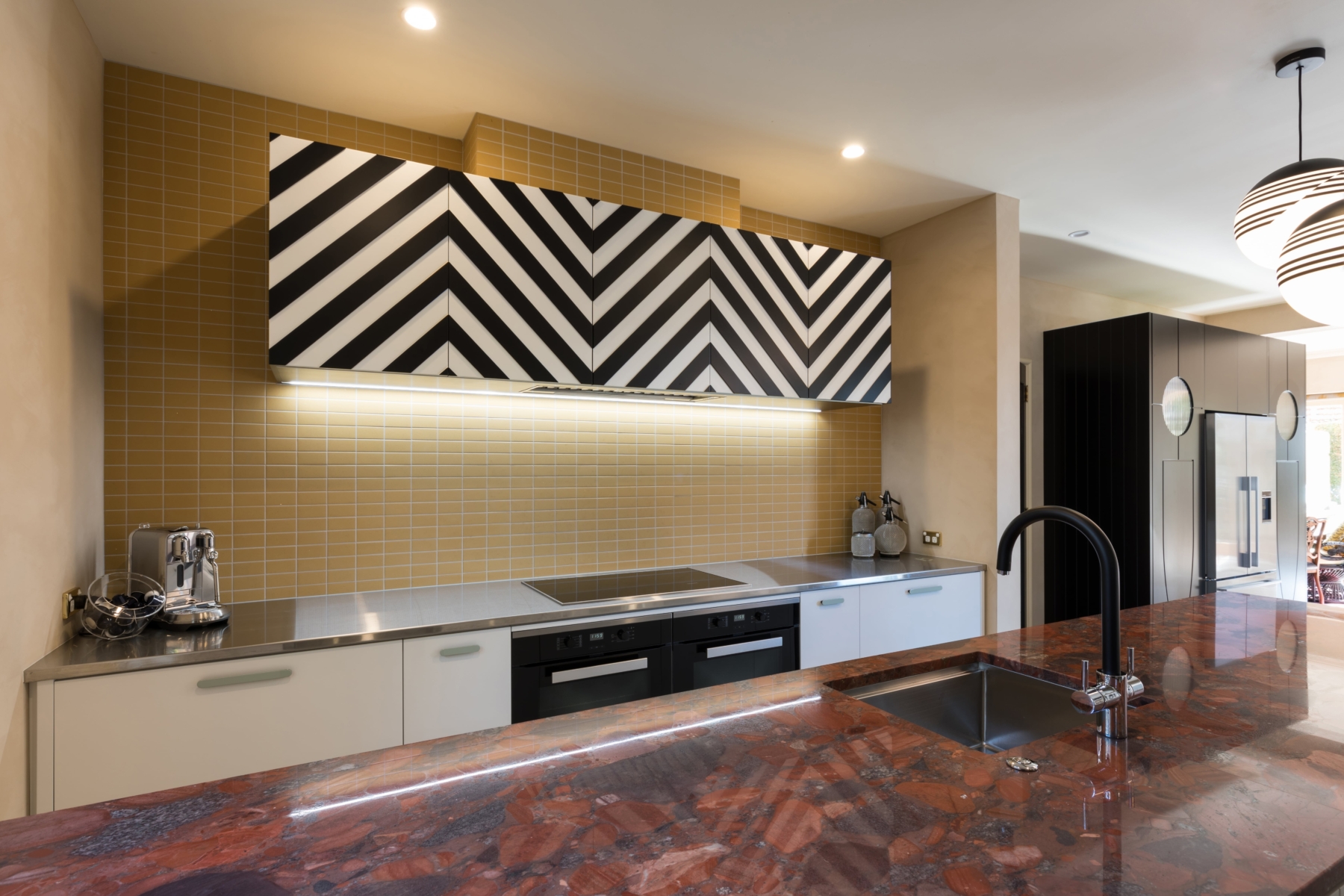
A contemporary bespoke kitchen is typically composed of hard, reflective and textural materials. Stone benchtops, whether marble, natural stone, porcelain, engineered stone or solid timber, all bring their own character. Cabinetry, tile splashbacks, metal hardware and glass all contribute to a layered material palette. These elements are beautiful. But without softness, even the most considered material palette can feel cold.
This is where kitchen curtains do something no other element can. Fabric introduces a softness that is both visual and tactile. It absorbs sound, catches light differently at different times of day, and brings an organic quality that balances the precision of joinery and stone work. When a curtain moves gently in a breeze from an open window, it introduces a sense of life and ease that no fixed material can replicate.
In Joanne’s work, the relationship between hard and soft materials is always considered carefully. A kitchen with a bold marble benchtop and dark cabinetry might carry a heavy linen curtain in a warm neutral tone to balance the visual weight. A lighter, brighter kitchen might carry a richly patterned curtain as the one element that anchors and grounds the space. The contrast is the point.
Curtains as a Counterpoint to Precision
Bespoke kitchens are defined by precision. Every door gap, every handle alignment, every material transition is considered. Kitchen curtains offer a welcome counterpoint to all of that precision. They introduce something that is deliberately imprecise, fluid and soft.
This contrast is what makes a bespoke interior feel genuinely luxurious rather than simply expensive. When everything in a room is hard-edged and perfectly aligned, the space can feel more like a catalogue shoot than a home. A beautiful curtain interrupts that perfection in the most welcome way.
Using Fabric, Pattern and Colour to Create Drama and Personality
If there is one design principle that Joanne returns to consistently, it is this: do not be timid. A kitchen curtain is not a background element. It can be the element that defines the entire mood of the space. The fabric you choose, the pattern you select, and the colour you commit to all have the power to make a kitchen feel like something genuinely extraordinary.
Consider a deep botanical print in rich greens and ochres, falling in generous pooled lengths alongside a set of French doors that open to a garden. Or a heavy woven stripe in charcoal and cream that frames a window above a solid timber benchtop. Or a silk-blend curtain in a saturated jewel tone, catching the light in a north-facing kitchen and casting warmth across a pale stone floor. These are not hypothetical choices. These are the kinds of decisions that transform a kitchen from a functional space into an evocative one.
The key is confidence. Kitchen curtains work best when they are chosen with conviction rather than caution. A half-hearted curtain in a safe, inoffensive fabric tends to disappear into the background and contribute very little. A curtain chosen with purpose and personality becomes one of the most memorable details in the entire home.
Colour as a Design Tool
Colour in kitchen curtains is not something to shy away from. In fact, the kitchen is often an ideal place to introduce a colour story that runs through to the adjoining dining and living spaces. A curtain can carry a colour that is referenced in the cabinetry, echoed in the upholstery, or picked up in a piece of artwork. This kind of considered colour layering is what gives a bespoke interior its coherence and depth.
For homeowners exploring what is possible in their own kitchens, the projects featured in our Bespoke Kitchens Auckland Central: Beautifully Designed Spaces for the Heart of the City showcase how colour, fabric and cabinetry can work together to create something genuinely distinctive.
How Kitchen Curtains Help Connect the Kitchen with Dining and Living Areas
In open-plan homes, one of the most common design challenges is creating a sense of cohesion across spaces that flow into one another without hard boundaries. The kitchen, dining area and living room often need to feel connected and consistent, while still retaining their individual character.
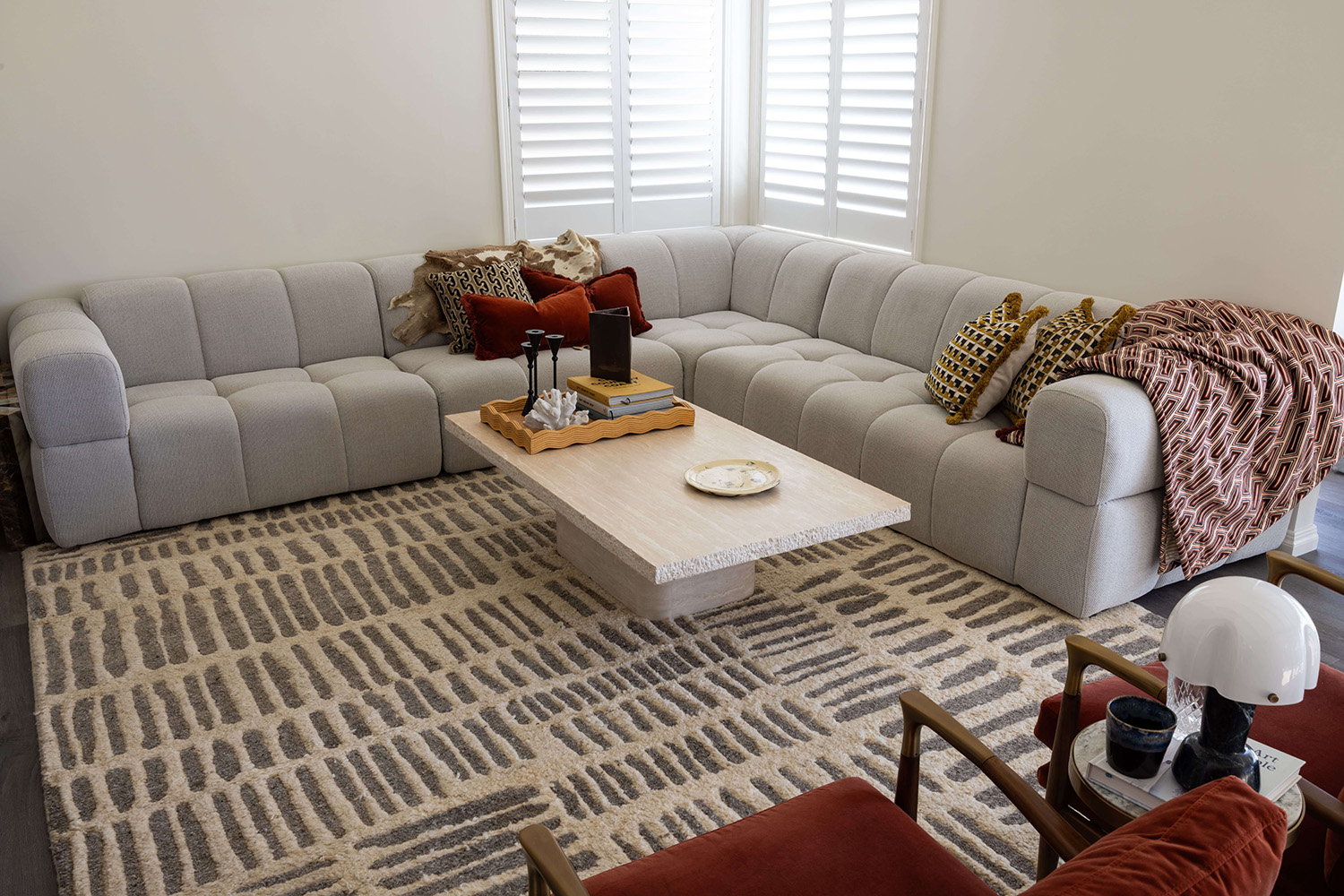
Kitchen curtains play a beautifully practical role here. When a curtain fabric is selected to work with the soft furnishings in the adjoining living or dining space, it creates a visual thread that ties the whole area together. The eye travels from the sofa cushions to the dining chair upholstery to the kitchen curtain, and reads the space as one cohesive interior rather than three separate rooms.
This is particularly relevant in New Zealand’s older homes, where original rooms have been opened up to create contemporary open-plan living. The challenge of making these transitions feel natural is something Joanne addresses in every project. Soft furnishings, including kitchen curtains, are consistently one of the most effective tools for achieving that seamlessness.
The approach Joanne brings to complete interiors is also beautifully demonstrated in her Bespoke Kitchens – Remuera: Beautifully Designed Spaces for Auckland’s Most Discerning Homeowners, where considered material choices and layered soft furnishings work together across kitchen and living spaces.
Choosing the Right Scale, Fabric, Colour and Style
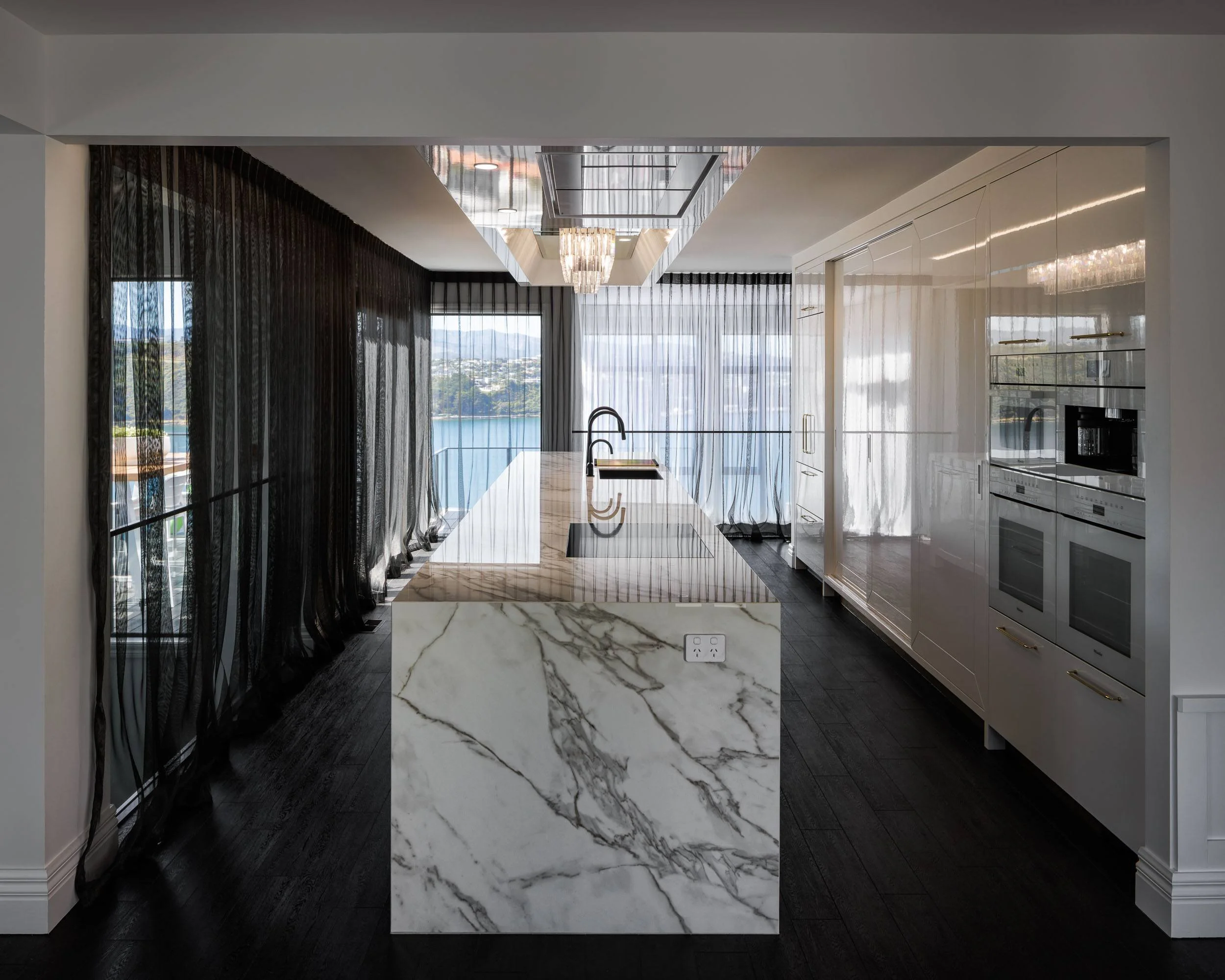
There are a few guiding principles that Joanne applies when advising clients on kitchen curtains. Getting these right is the difference between curtains that feel effortlessly integrated and curtains that feel like an afterthought.
Scale matters enormously. A curtain that is too short or too narrow will always look hesitant and domestic in the least flattering way. Curtains should ideally be floor-length, hanging from ceiling height or as close to it as the window architecture allows. They should be generous in width, with enough fullness to gather softly rather than stretching flat across the window. This generosity of scale is what gives kitchen curtains their drama.
Fabric choice should reflect the kitchen’s character. A heavily textured linen or a woven natural fabric suits a relaxed, organic kitchen palette beautifully. Silk blends and more refined fabrics suit a more formal or architectural kitchen. Patterned fabrics, whether botanical, geometric or abstract, should be scaled to the window. A small repeat pattern on a large window can feel lost; a bold large-scale print can be extraordinary.
Lining is non-negotiable in a quality installation. Lined kitchen curtains hang better, look richer, protect the fabric from sun damage and provide far better light control. In a kitchen environment, consider an interlining for even more body and presence. This is the detail that separates custom curtains from off-the-shelf solutions.
Hardware should be considered from the start. Curtain poles, rings and finials are part of the design, not an afterthought. Brass or brushed gold hardware can complement warm kitchen tones beautifully. Blackened steel reads as contemporary and architectural. The hardware should connect to other metal finishes in the kitchen, whether in tapware, handles or light fittings.
For inspiration on how detailed material and finish decisions come together across a complete interior, the Bespoke Bathroom Design Herne Bay project is a wonderful example of how Joanne layers finishes, hardware and materials to create spaces with depth and coherence.
Bespoke Interiors Are About the Full Picture
A bespoke kitchen is so much more than beautifully designed cabinetry and a carefully chosen benchtop. It is a complete interior environment, and every element contributes to how the space feels to live in. Joanne’s approach has always been to look at the full picture: the architecture, the light, the materials, the furniture, the colour, the artwork, and yes, the soft furnishings.
Kitchen curtains sit within this broader interior vision. They are not an add-on decided at the end of the project once the cabinetry is installed and the benchtop is in place. When Joanne works with clients on complete interiors, the soft furnishing conversation happens at the design stage, so that the curtains, the cabinetry and the materials are all resolved together. This is how a kitchen achieves that quality of feeling effortless and complete rather than assembled.
This is also why it matters to work with a designer who thinks across all of these layers simultaneously. A kitchen designer who considers only cabinetry and joinery will hand you a technically excellent kitchen. A designer who considers the full interior will hand you a kitchen that feels like home from the very first morning you wake up and make a cup of tea in it. According to Designers Institute of New Zealand, interior design that considers the full environment, including soft furnishings and textiles, consistently delivers greater client satisfaction and liveability.
The cumulative effect of getting all of these layers right is a space that has genuine warmth and personality. A kitchen that people want to spend time in. A kitchen that feels like it belongs to the people who live there, not to a showroom or a style trend. That is the goal of every project Joanne undertakes, and kitchen curtains are one of the most powerful tools in achieving it.
Frequently Asked Questions
Are kitchen curtains a practical choice in a busy family kitchen?
Yes, kitchen curtains can absolutely work in a family kitchen when the right fabric is chosen. Heavier woven linens and performance fabrics are durable, easy to care for, and hold their appearance well over time. With proper lining and professional installation, kitchen curtains are as practical as they are beautiful.
What length should kitchen curtains be?
For a bespoke, considered look, kitchen curtains should ideally be floor-length, beginning as close to ceiling height as possible. This elongates the window, adds drama and avoids the half-hearted appearance of curtains that stop at the sill or just below it. Generous length is one of the most impactful choices you can make.
Can kitchen curtains work in an open-plan kitchen and living space?
Kitchen curtains are particularly effective in open-plan environments. When the curtain fabric relates to the soft furnishings in the adjoining living or dining area, it creates a visual connection that makes the whole space feel cohesive and considered. This is one of the most elegant ways to unify an open-plan interior.
What fabrics work best for kitchen curtains?
Natural fibres such as linen, cotton and linen-cotton blends are popular choices for kitchen curtains because they are beautiful, breathable and age gracefully. Heavier woven fabrics add body and drama. Patterned fabrics in botanical, geometric or abstract prints can introduce personality and a strong design statement. All kitchen curtains should be fully lined for the best result.
How do kitchen curtains fit into a bespoke interior design project?
In a truly bespoke interior, kitchen curtains are considered from the very beginning of the design process, not added at the end. The fabric, colour, scale and hardware are resolved alongside the cabinetry, benchtop, flooring and other finishes. This integrated approach is what allows curtains to feel like a natural, essential part of the space rather than an afterthought.
Final Thoughts: A Kitchen That Feels Completely Yours
If there is one idea to take away from this article, it is this: be bold. Kitchen curtains are one of the most personal and expressive design choices available to you in a kitchen renovation or new build. They bring drama, warmth, texture, colour and personality in a way that is completely distinct from any other element in the space.
A beautiful curtain does not compete with a stunning benchtop or handsome cabinetry. It completes the picture. It is the layer that makes everything else feel settled and resolved. It is what makes a kitchen feel genuinely lived in, genuinely personal, and genuinely yours.
If you are considering a bespoke kitchen or interior renovation in Auckland or anywhere in New Zealand, Joanne would love to talk with you about the full picture, including those gorgeous curtains. Every detail matters, and every detail is an opportunity to create something extraordinary.
Get in touch with Bespoke Kitchens by Joanne Godding to begin your design conversation today.